English


Views: 0 Author: Site Editor Publish Time: 2026-11-23 Origin: Site


Explore how modern automated biscuit production lines work for hard, soft, and sandwich biscuits. Compare capacities (150–5,000 kg/h), oven types, and key selection criteria for commercial bakeries.
An automated biscuit production line is an integrated industrial food processing system designed to continuously mix, form, bake, cool, and package hard biscuits, soft biscuits, crackers, and sandwich cookies. Depending on the working width (typically 600 mm to 1,500 mm) and tunnel oven length, a modern commercial line delivers a production capacity ranging from 100 kg/h to over 5,000 kg/h, reducing manual labor requirements by up to 70% while ensuring consistent weight, texture, and baking color.
For commercial bakeries and food manufacturers planning to scale output or launch new SKU lines, selecting the right machine configuration depends on dough rheology, energy availability, and factory footprint.
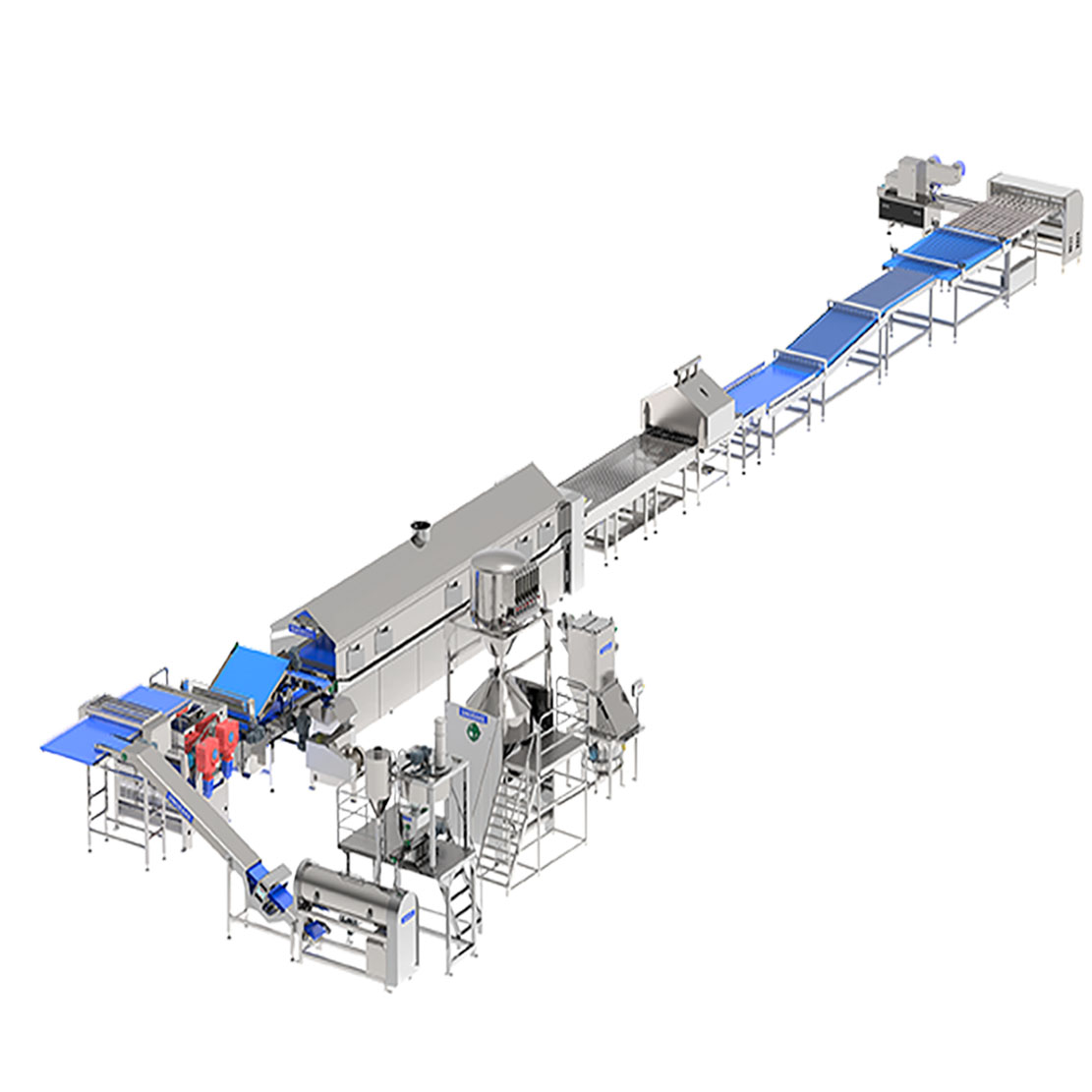
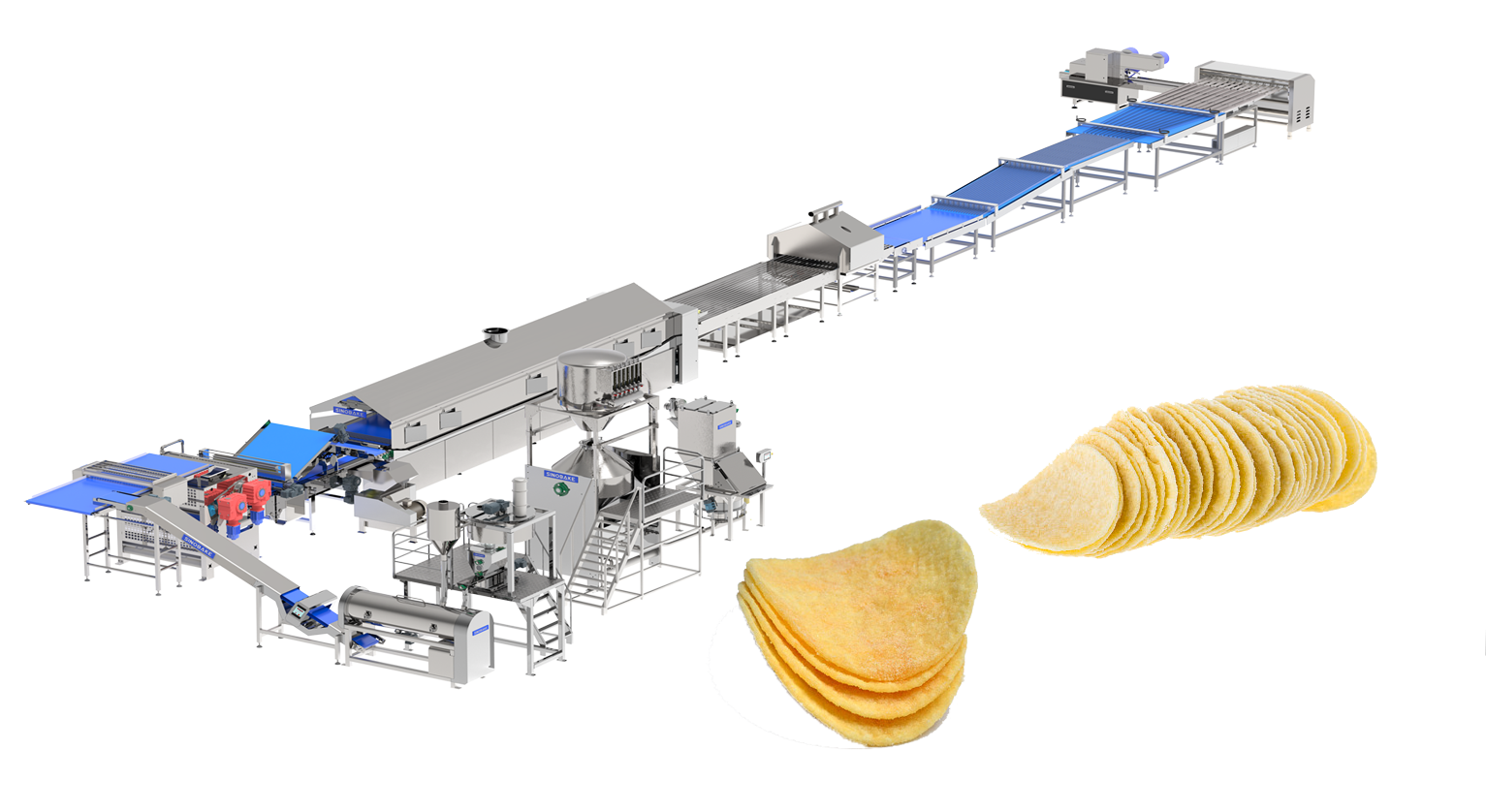
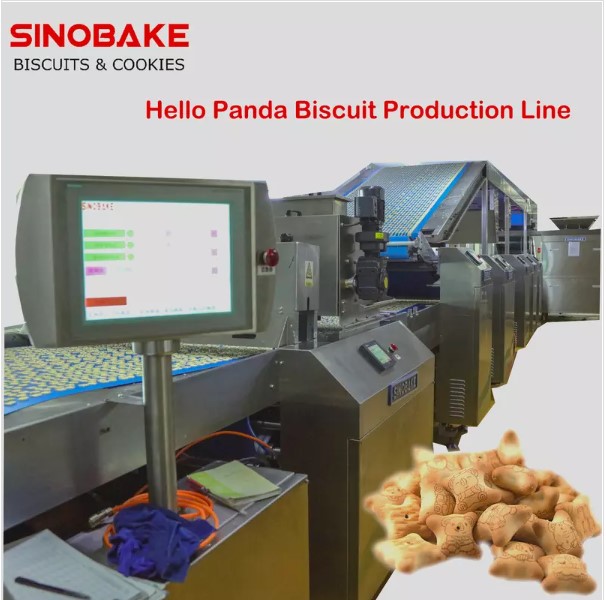
A standard turnkey biscuit manufacturing line operates through six synchronized modules controlled via a central PLC system:
Dough Mixing & Feeding: Horizontal or vertical high-speed mixers blend flour, fats, sugars, and leavening agents. Hard dough requires rigorous kneading to develop gluten elasticity, whereas soft dough requires gentle mixing to prevent gluten formation.
Sheet Forming & Molding:
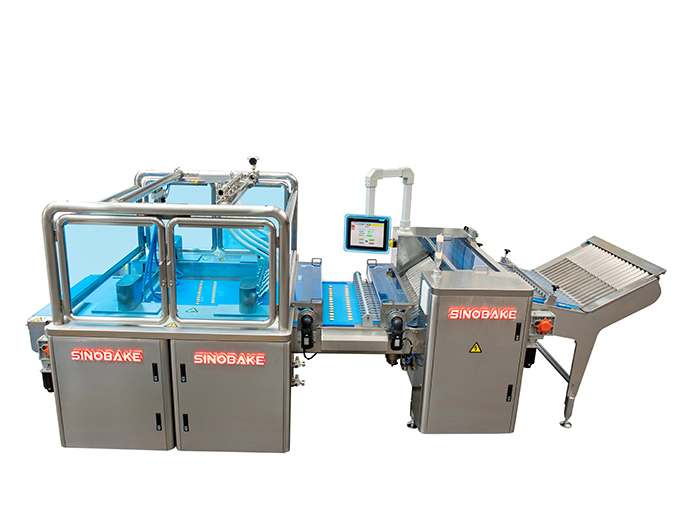
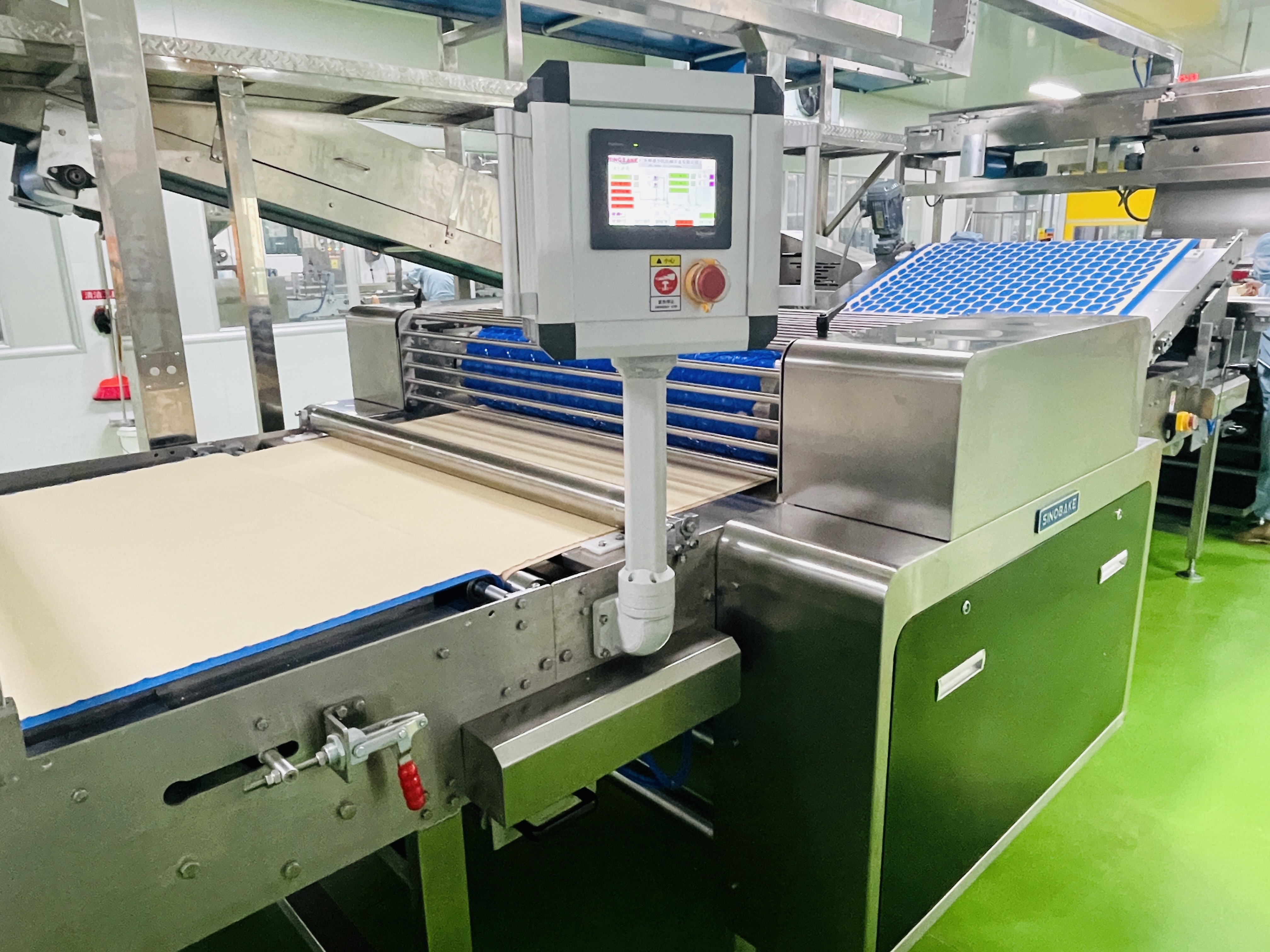
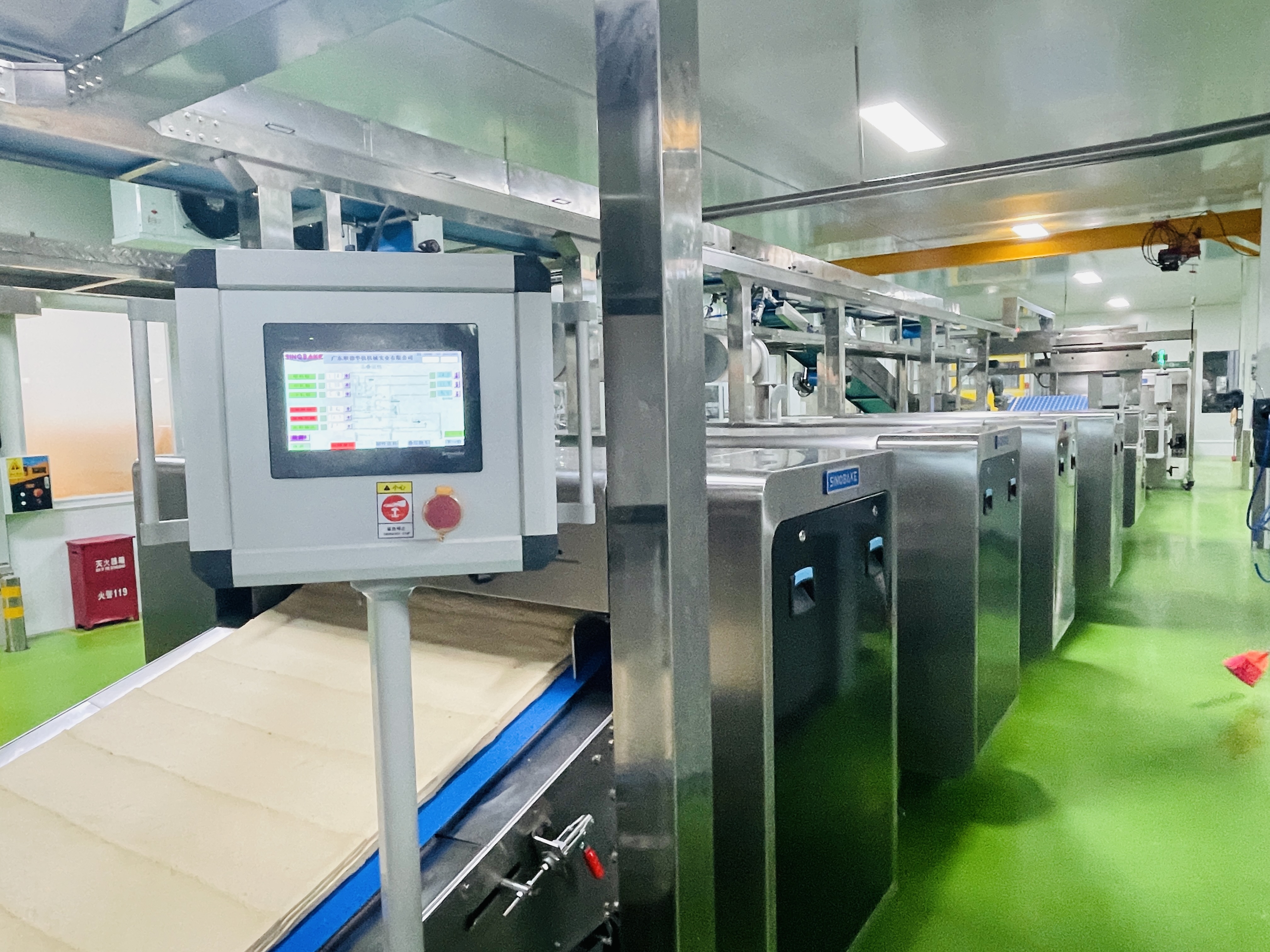
Hard Biscuit & Cracker Forming: Uses a three-roll sheeter, gauge rollers (lamination optional for crackers), and a rotary cutter to stamp precise shapes and dock pinholes.
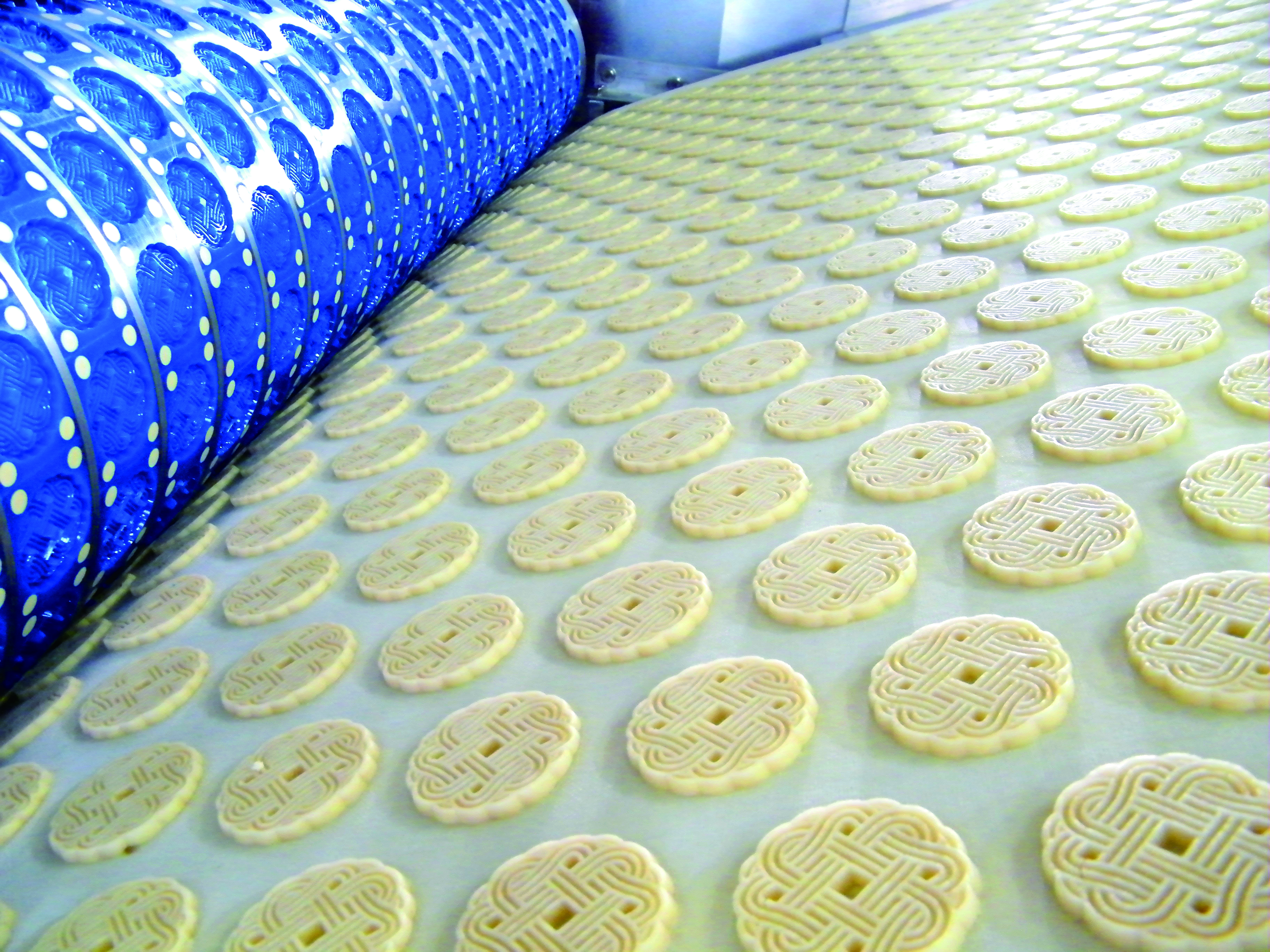
Soft Biscuit Forming: Uses a rotary molder with engraved brass or food-grade polymer rollers to press low-gluten dough directly onto the conveyor belt without scrap dough return.
Tunnel Oven Baking: The formed dough pieces travel through a multi-zone tunnel oven (typically 30 m to 80 m in length). Independent top and bottom temperature zones control moisture evaporation, Maillard browning, and biscuit expansion.
Oil Spraying & Seasoning (Optional): Immediately after exiting the oven, hot biscuits pass through a centrifugal oil sprayer to enhance surface gloss, flavor, and shelf life.
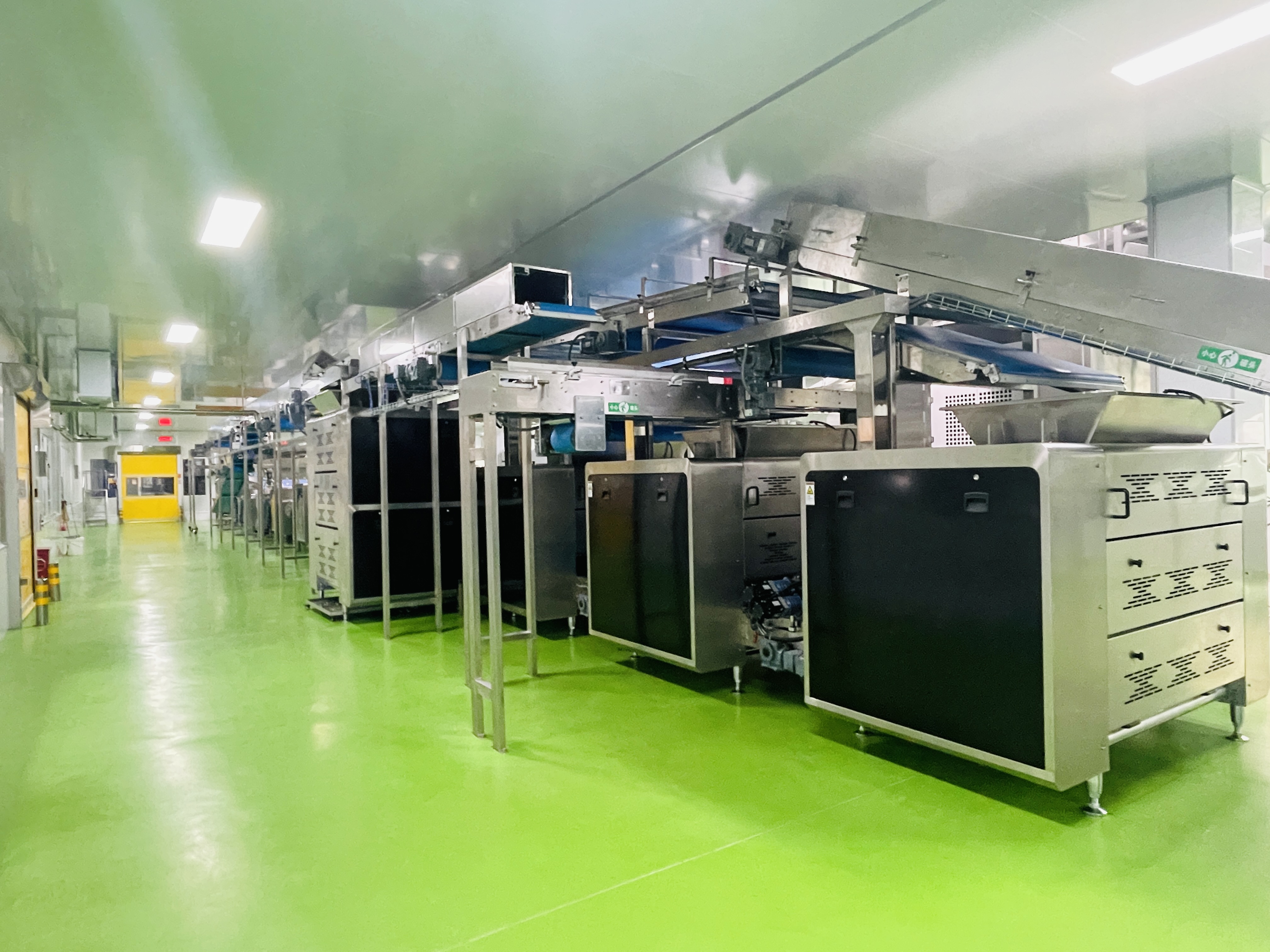
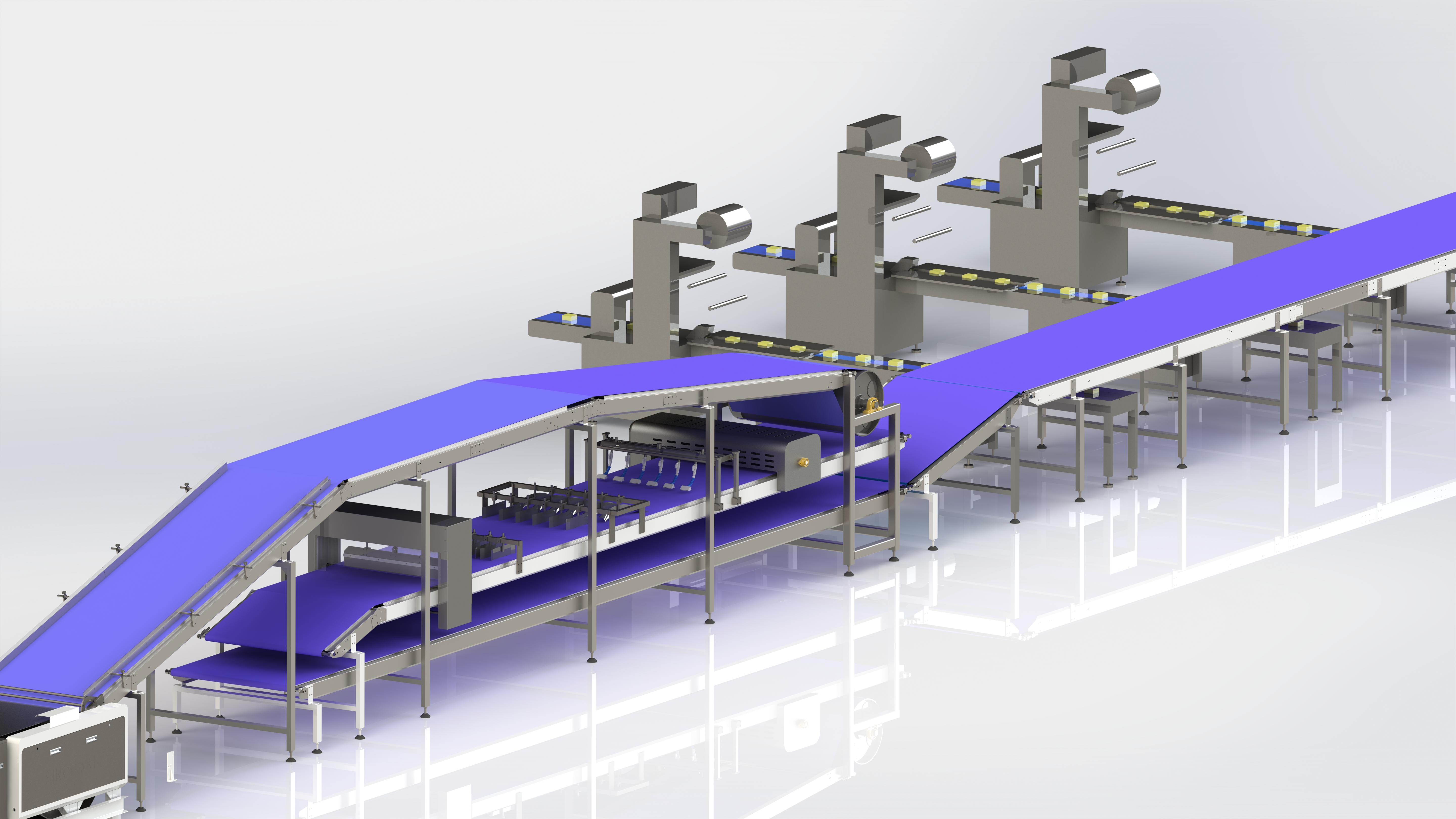
Multi-Tier Cooling Conveyor: Biscuits cool naturally on tiered or Z-type conveyors for 4 to 6 minutes until internal temperatures drop below 35°C, preventing condensation inside packaging.
Stacking & Automatic Packaging: Star-wheel or penny stackers align the cooled biscuits for pillow-pack, slug-pack, or tray-loading flow wrappers.
While both biscuit types share downstream baking and cooling equipment, their forming mechanics differ fundamentally. Many mid-to-large manufacturers opt for a combo (interchangeable) biscuit production line to run both recipes on a single oven.
Technical Parameter | Hard Biscuit & Cracker Line | Soft Biscuit & Cookie Line | Hard & Soft Combo Line |
Dough Characteristics | High water, low fat/sugar, elastic gluten | Low water, high fat/sugar, short texture | Adaptable to both dough types |
Core Forming Machine | Multi-stage Sheeter + Rotary Cutter | Rotary Molder (or Wire-Cut Depositor) | Dual-head Forming Unit (Quick Switch) |
Scrap Dough Return | Yes (continuous web recycling system) | No (direct mold-to-band transfer) | Active only in hard biscuit mode |
Typical Baking Time | 3 – 7 minutes (It depends on different products and formulas.) | 6 – 10 minutes (It depends on different products and formulas.) | Programmable PLC recipe presets |
Standard Working Width | 600mm/1000mm/1200mm/1500mm | 600mm/1000mm/1200mm/1500mm | 600mm/1000mm/1200mm/1500mm |
Ideal Target Products | Marie, Petit Beurre, Soda Crackers | Shortbread, Digestive, Butter Cookies | Full-range commercial bakery portfolios |
When evaluating equipment suppliers and requesting technical proposals (RFQs), procurement teams should verify four engineering criteria:
1. Heating Source & Energy Efficiency: Tunnel ovens are available in direct gas-fired (DGF), indirect radiant gas/diesel, electric, and hybrid configurations. Direct gas ovens offer rapid heat response ideal for crackers, while indirect cyclotherm or electric ovens provide uniform radiant heat favored for delicate soft cookies. Look for high-density rock wool insulation (minimum 200–250 mm) to minimize heat loss.
2. Oven Band Selection:
Wire Mesh Band: Best for crackers and hard biscuits requiring strong bottom air circulation.
Steel Band (Carbon or Stainless): Essential for high-fat soft biscuits, cookies, and direct-deposited products to prevent dough seepage and ensure smooth release.
3. Hygiene & International Compliance: Ensure all food-contact surfaces utilize SUS304 or SUS316 stainless steel, food-grade PU/cotton conveyor belts, and easy-access cleanout doors. Equipment exported to Europe, Eurasia, or the Middle East should comply with CE, EAC, or ISO 9001 standards.
4. Factory Layout & Space Optimization: A straight-line 1,000 kg/h plant typically requires 80 to 110 meters in length. If workshop length is constrained, engineers can configure an L-shaped, U-shaped, or multi-tier cooling layout to fit existing building dimensions without sacrificing output.
Commercial automated biscuit lines generally range from 300 kg/h (600 mm working width) for regional bakeries up to 1,500–2,000+ kg/h (1,200 mm working width) for large-scale industrial food plants. Output varies slightly depending on biscuit weight, thickness, and required baking duration.
Yes. A hard and soft biscuit combo line integrates both a rolling/rotary cutting section and a rotary molding section in front of the same tunnel oven. Operators can switch between hard and soft biscuit production in under 30 minutes using bypass conveyors and pre-programmed PLC baking curves.
For a mid-sized line (500–800 kg/h with a 30–40 meter oven), a minimum workshop length of 65 to 85 meters, width of 8 to 12 meters, and clear ceiling height of 4.5 meters is recommended. Compact U-turn cooling configurations can reduce the required building length by up to 25%.
To receive a tailored layout drawing and turnkey quotation, buyers should specify: (1) target biscuit types with sample photos or weights, (2) desired hourly capacity (kg/h), (3) preferred oven fuel type (natural gas, LPG, diesel, or electricity), (4) local industrial voltage (e.g., 380V/50Hz or 480V/60Hz), and (5) available workshop dimensions.
Frequently Asked Questions (FAQ)
Commercial automated biscuit lines generally range from 300 kg/h (600 mm working width) for regional bakeries up to 1,500–2,000+ kg/h (1,200 mm working width) for large-scale industrial food plants. Output varies slightly depending on biscuit weight, thickness, and required baking duration.
Yes. A hard and soft biscuit combo line integrates both a rolling/rotary cutting section and a rotary molding section in front of the same tunnel oven. Operators can switch between hard and soft biscuit production in under 30 minutes using bypass conveyors and pre-programmed PLC baking curves.
For a mid-sized line (500–800 kg/h with a 30–40 meter oven), a minimum workshop length of 65 to 85 meters, width of 8 to 12 meters, and clear ceiling height of 4.5 meters is recommended. Compact U-turn cooling configurations can reduce the required building length by up to 25%.
To receive a tailored layout drawing and turnkey quotation, buyers should specify: (1) target biscuit types with sample photos or weights, (2) desired hourly capacity (kg/h), (3) preferred oven fuel type (natural gas, LPG, diesel, or electricity), (4) local industrial voltage (e.g., 380V/50Hz or 480V/60Hz), and (5) available workshop dimensions.
At [SINOBAKE], our 600mm–1500mm modular biscuit lines are engineered with Schnieder PLC controls and CE-certified construction for bakeries across 60+ countries.
Contact us for more information: Atom Lin 0086 13794640490 whatspp/wechat
info@sinobake.net/ atom@sionbake.net
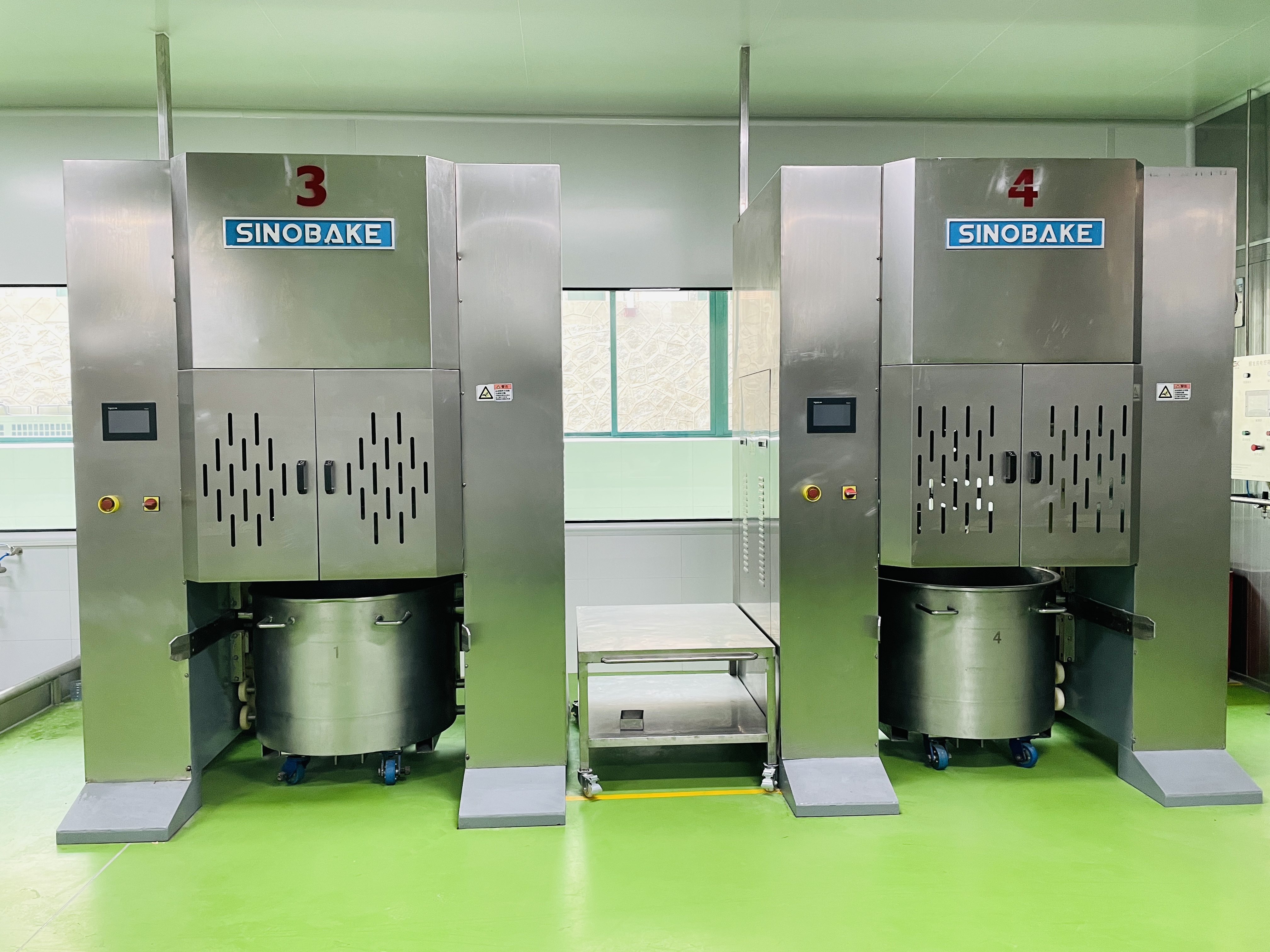 Cookie Dough, Cream Mixer
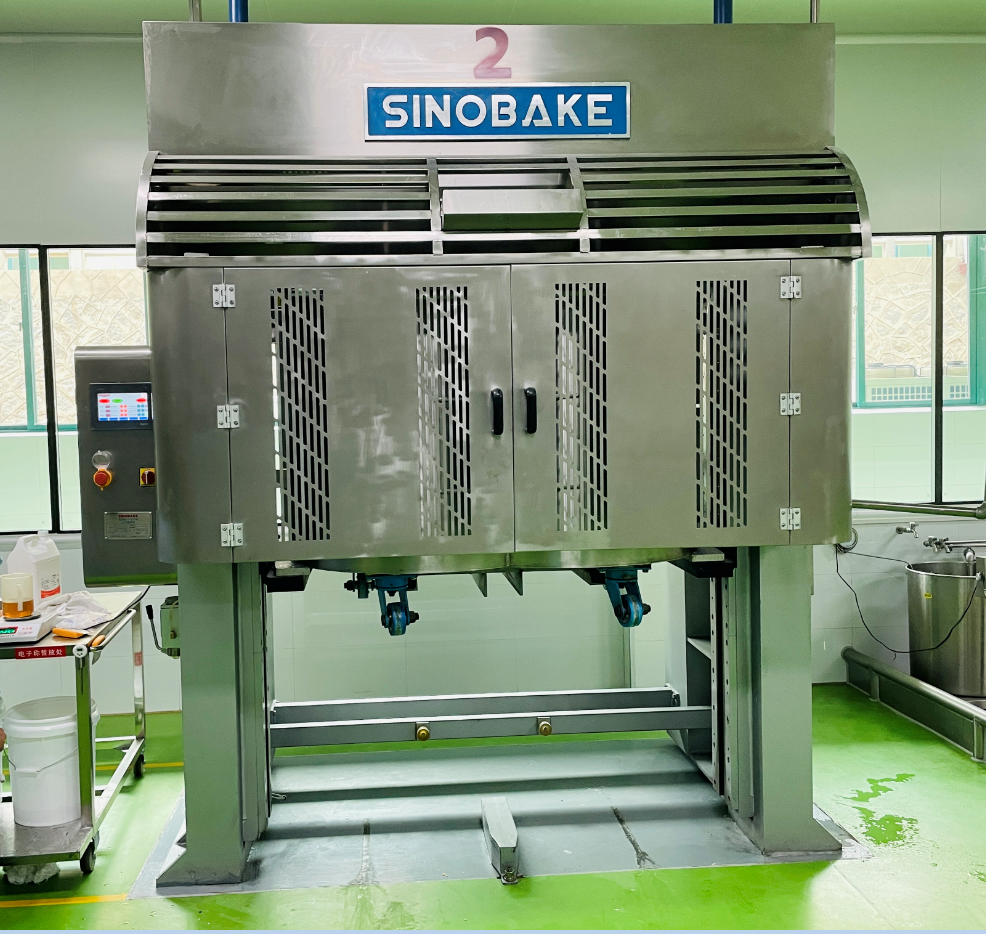 Vertical Dough Mixer
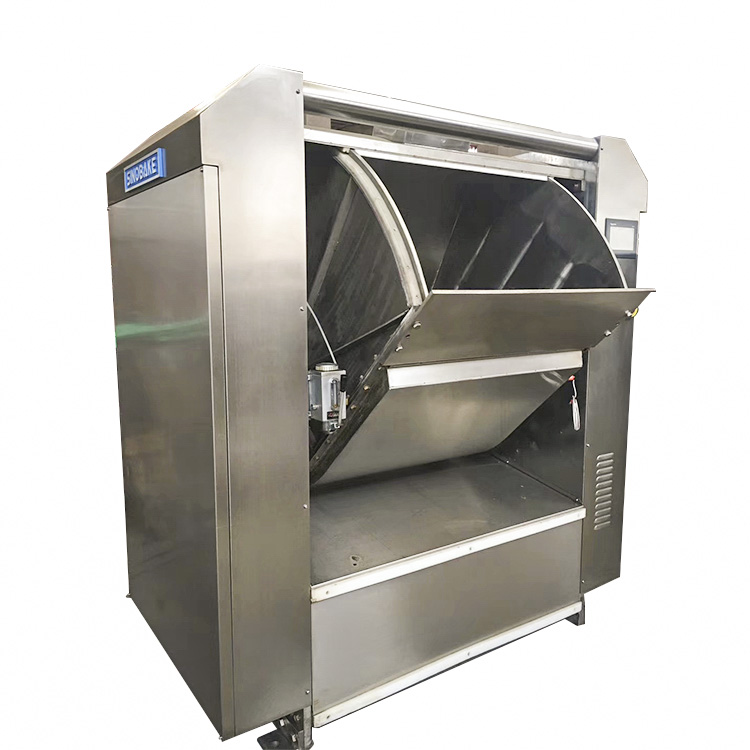 Horizontal Dough Mixer
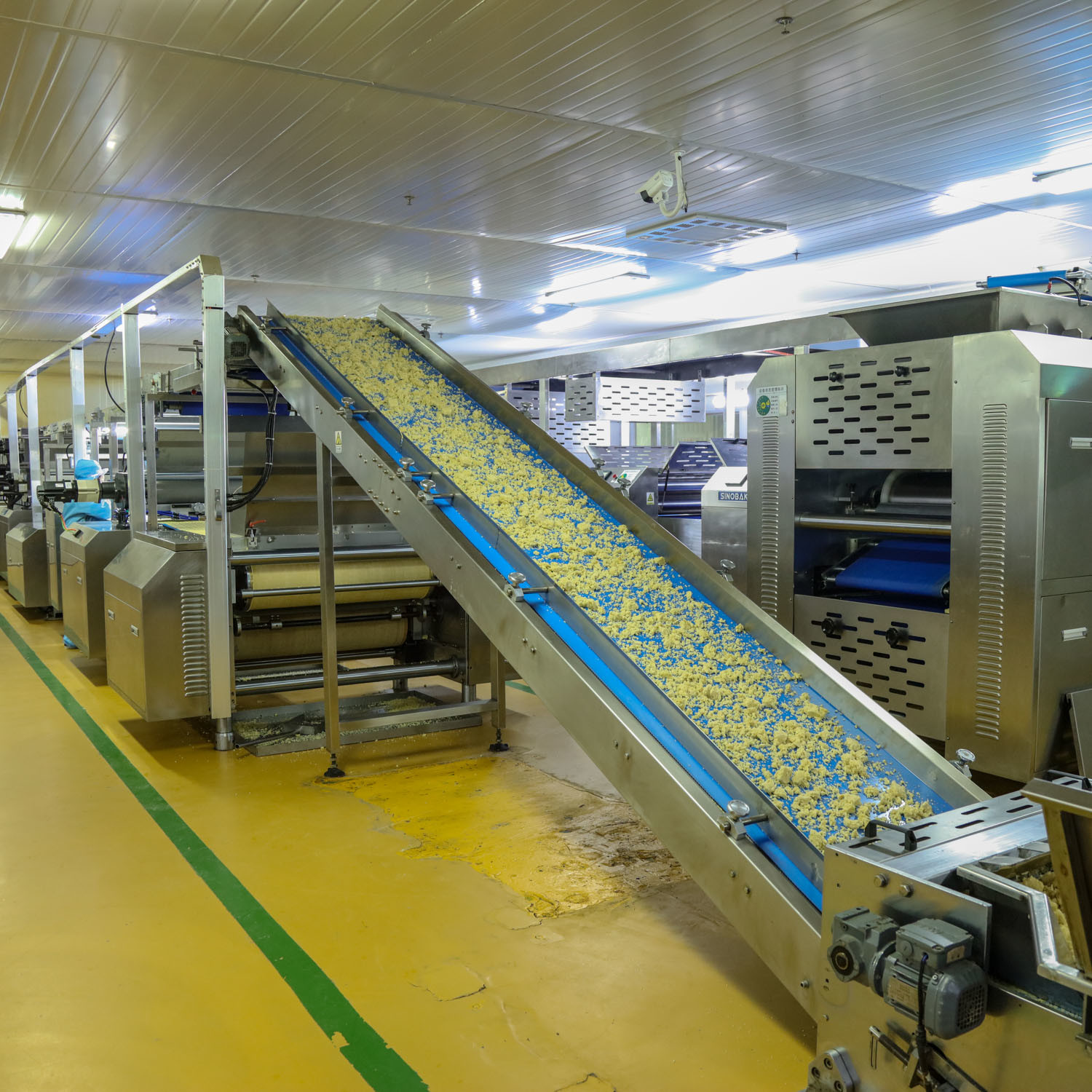 Auto Dough Feeding System
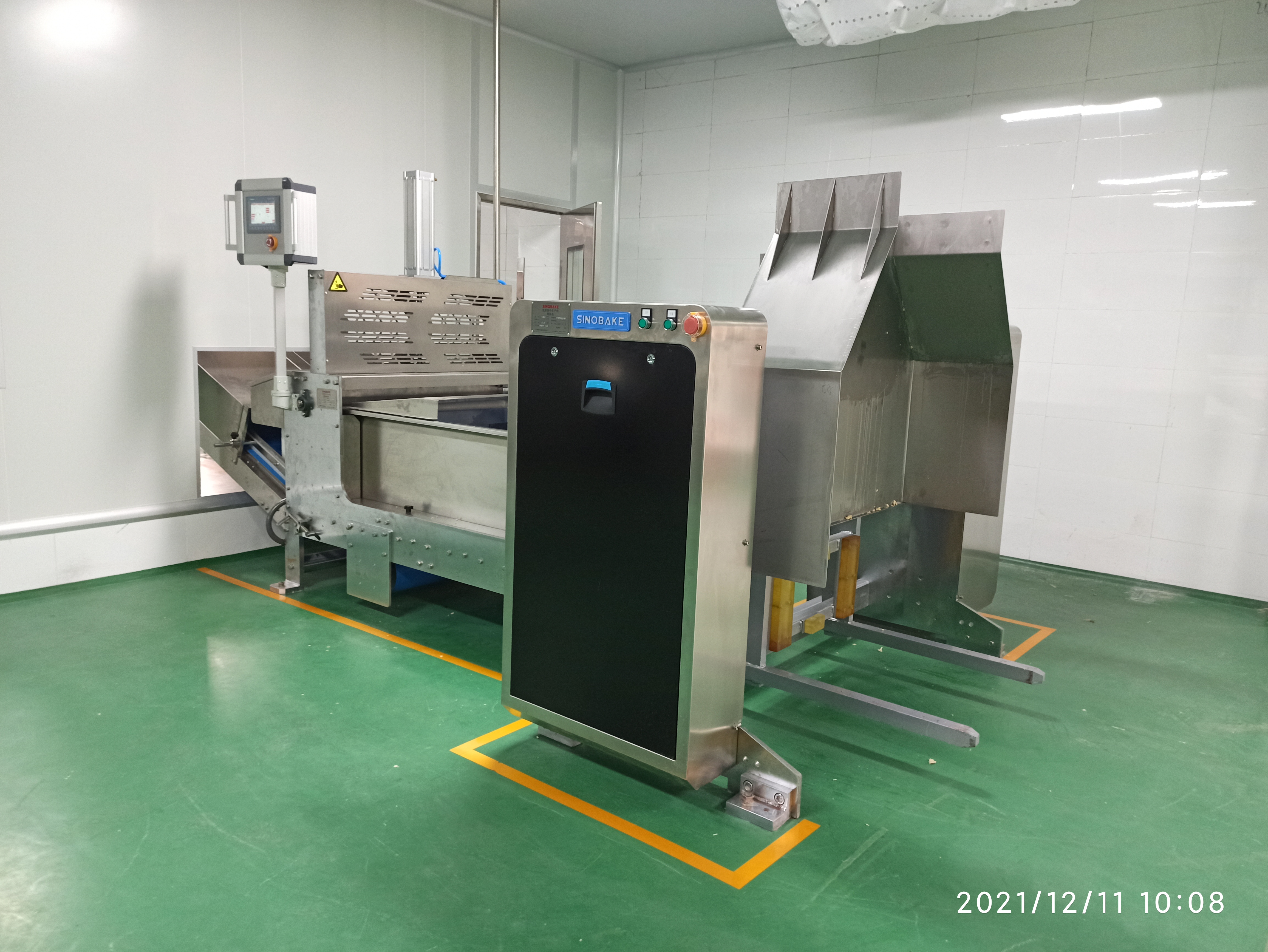 Tilting Machine
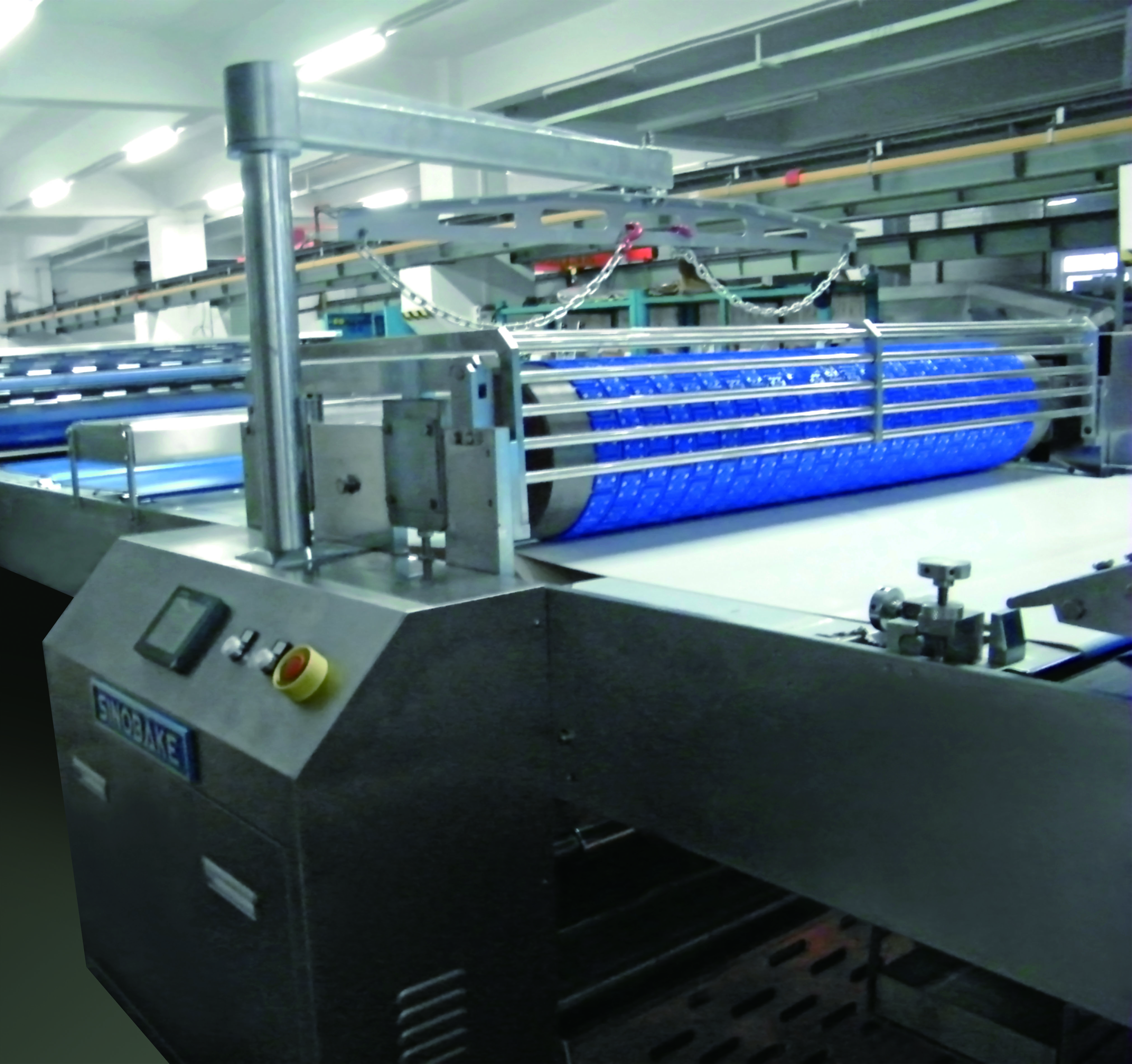 Hard Biscuit Forming Section
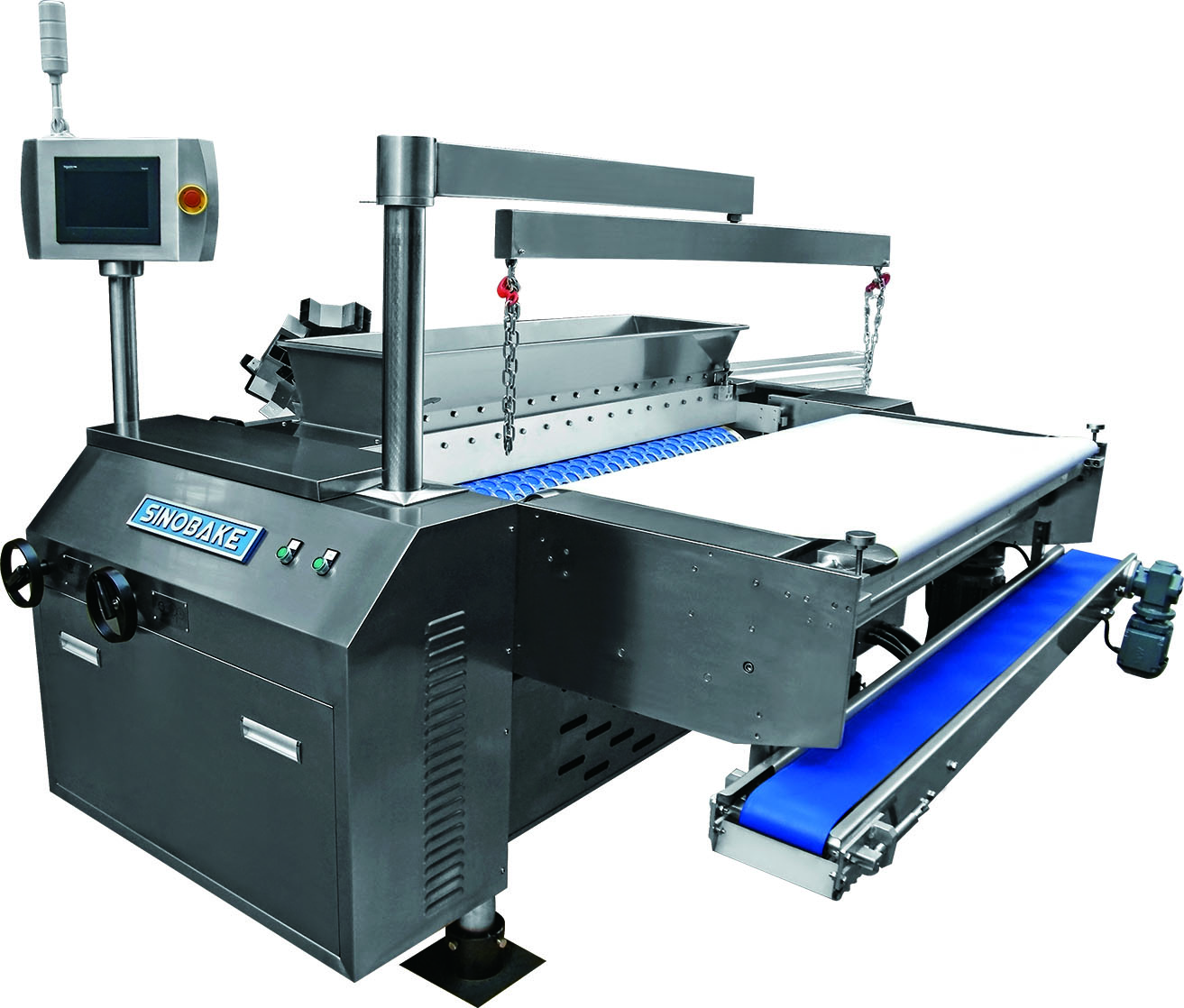 Soft Biscuit Forming Section
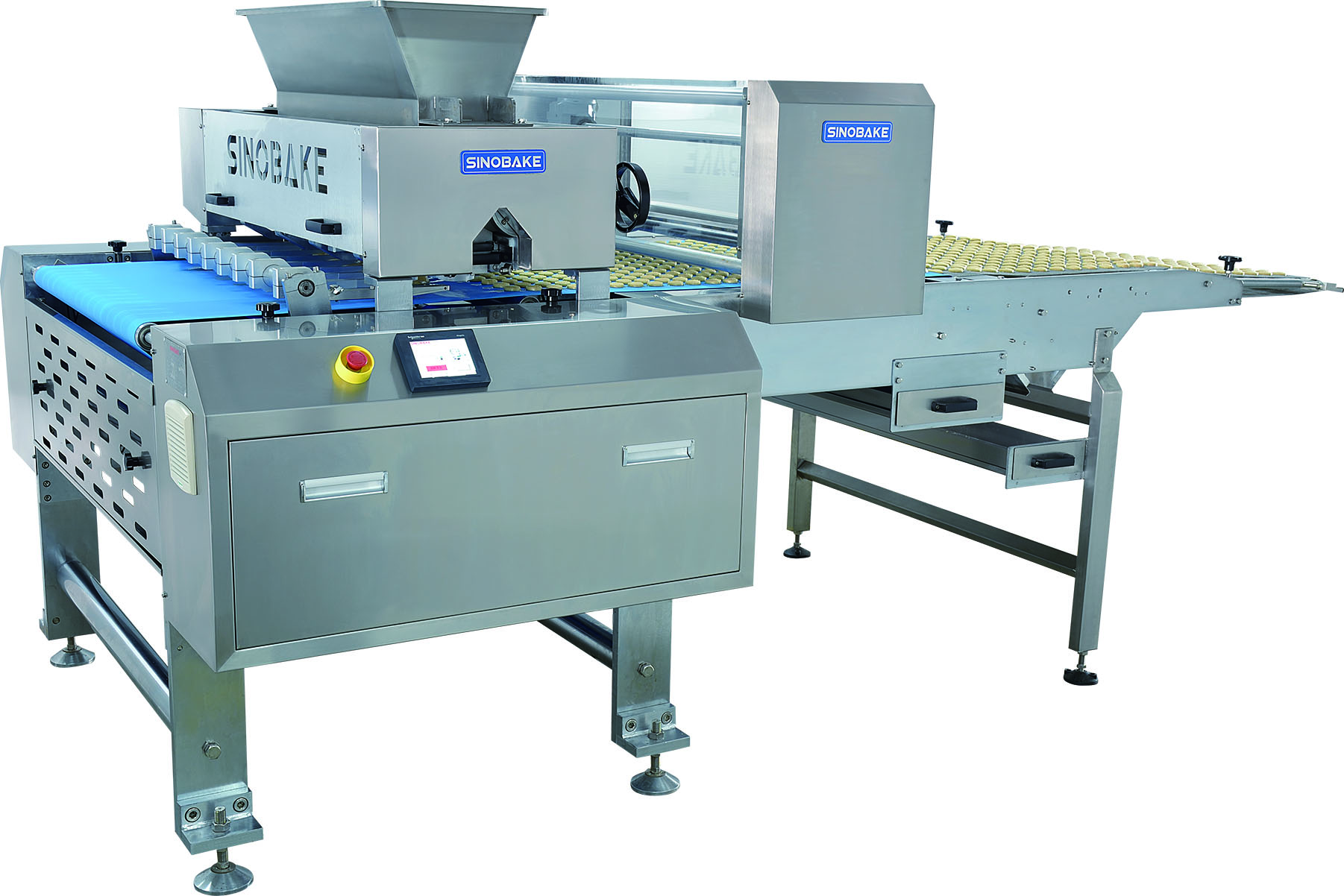 Cutting Cookie Forming Section
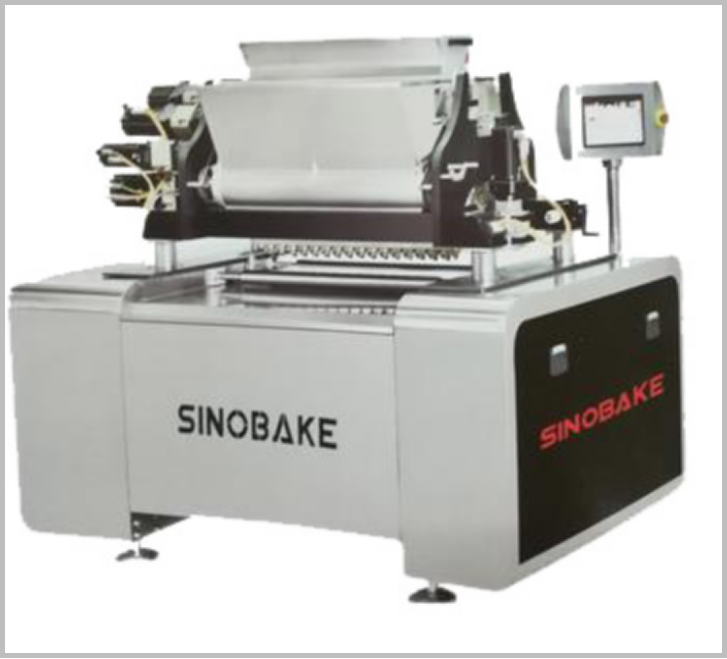
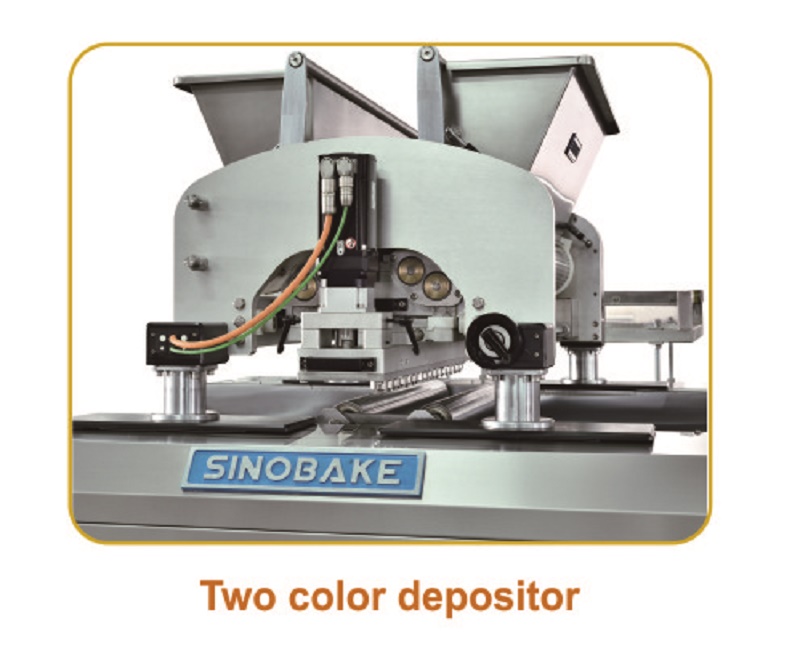 Depositor Forming Section
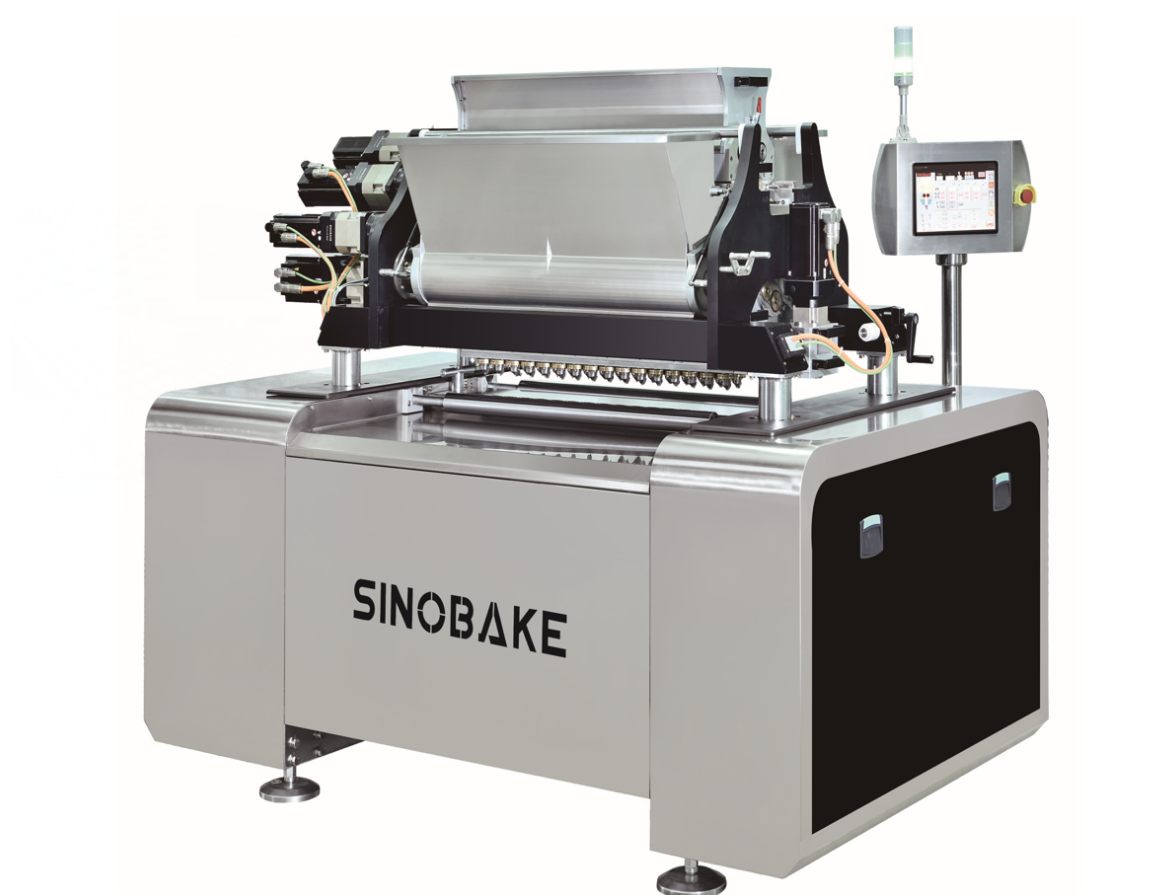 Farci/Center filled Cookie Forming Section
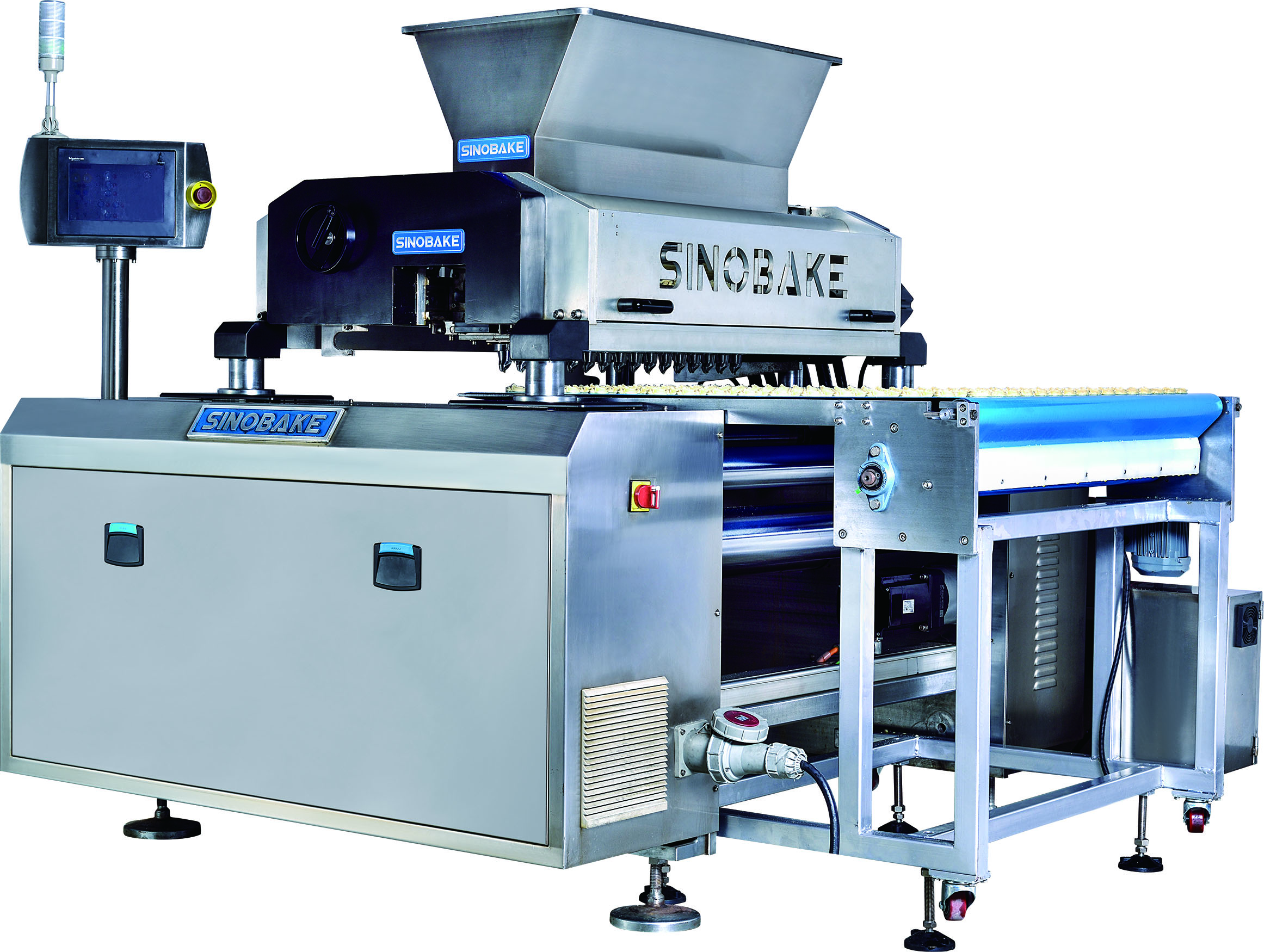 Multifunction Cookie Forming Section
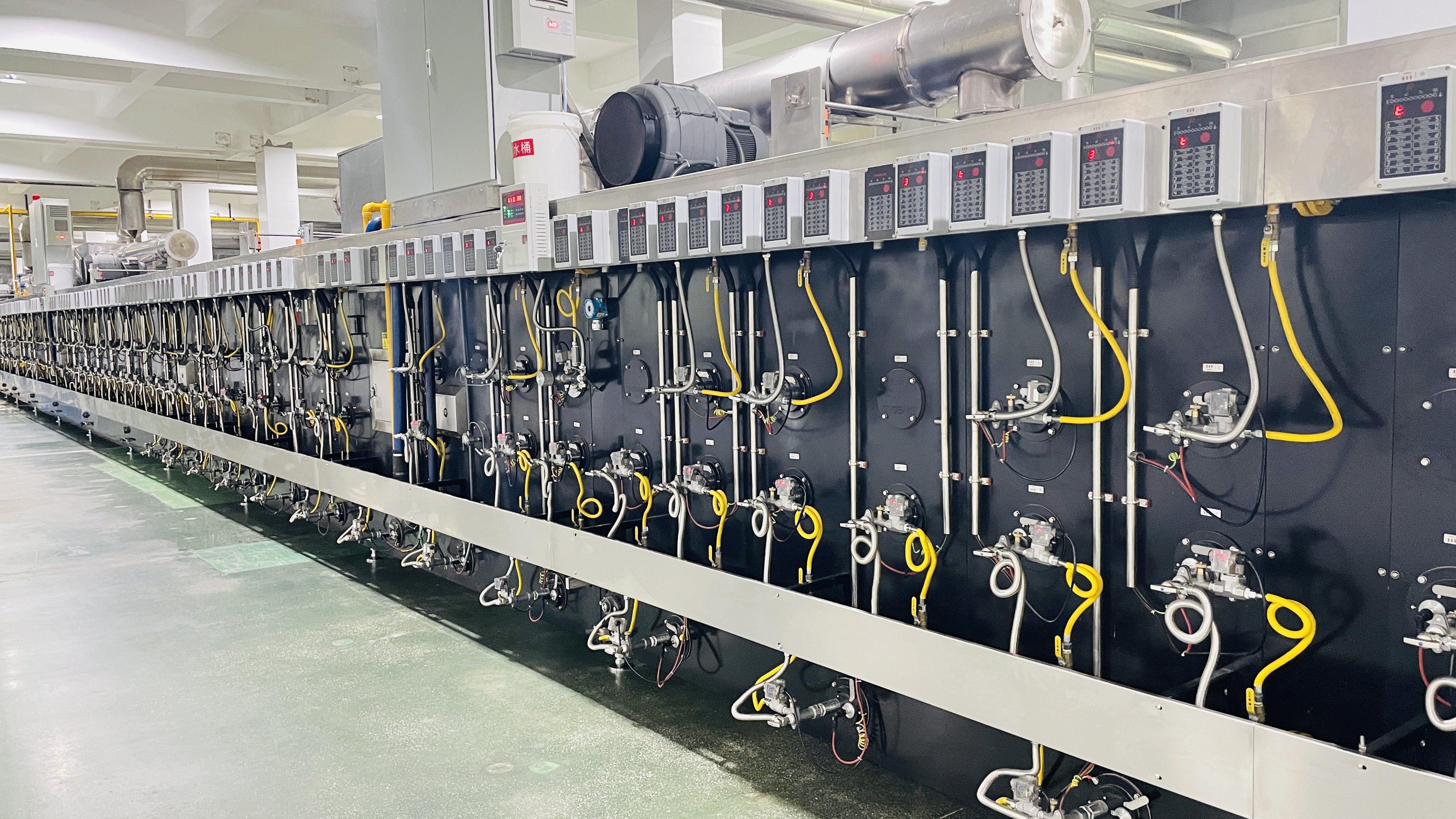 Directly Oven
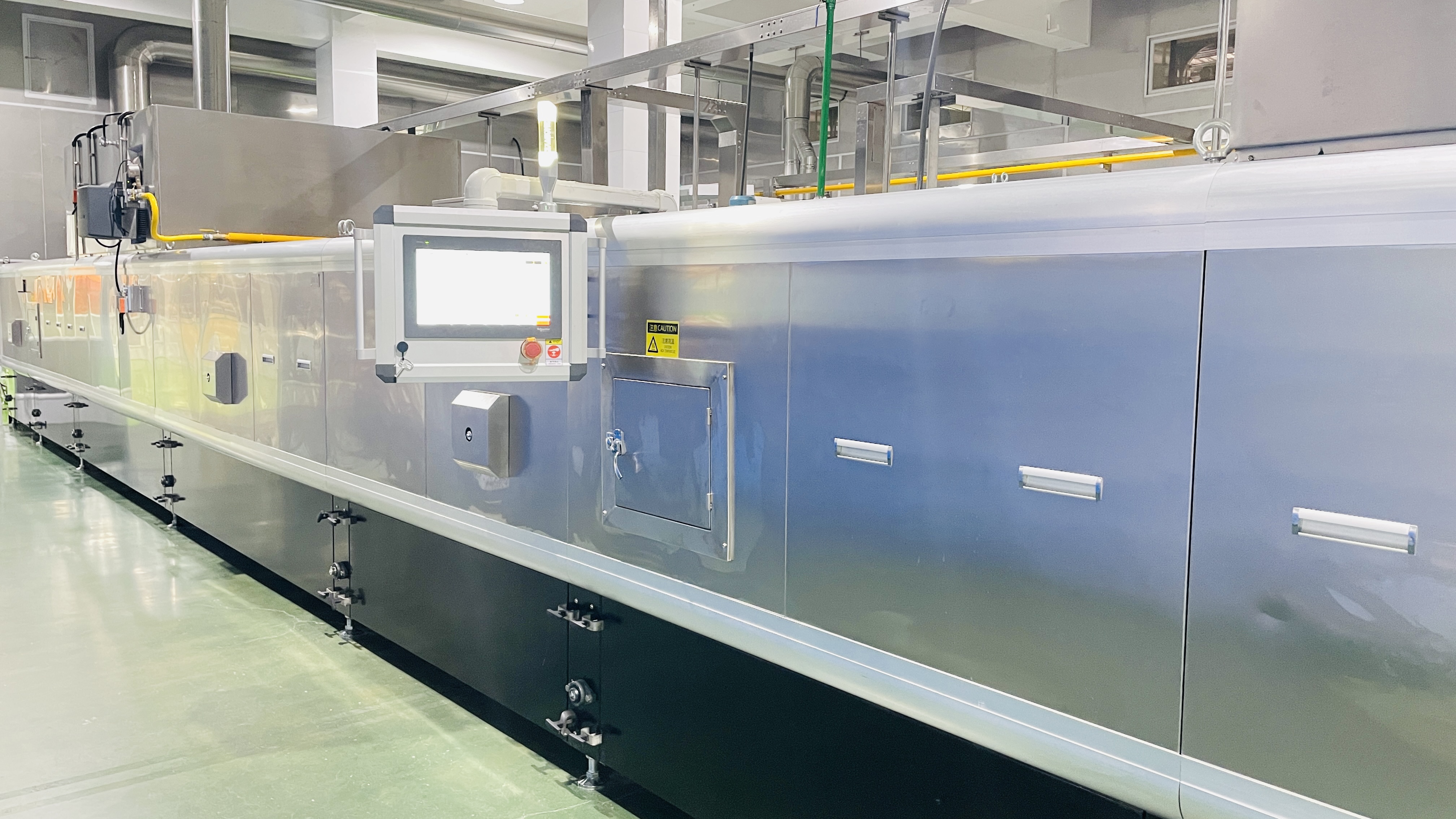 Indirectly Oven
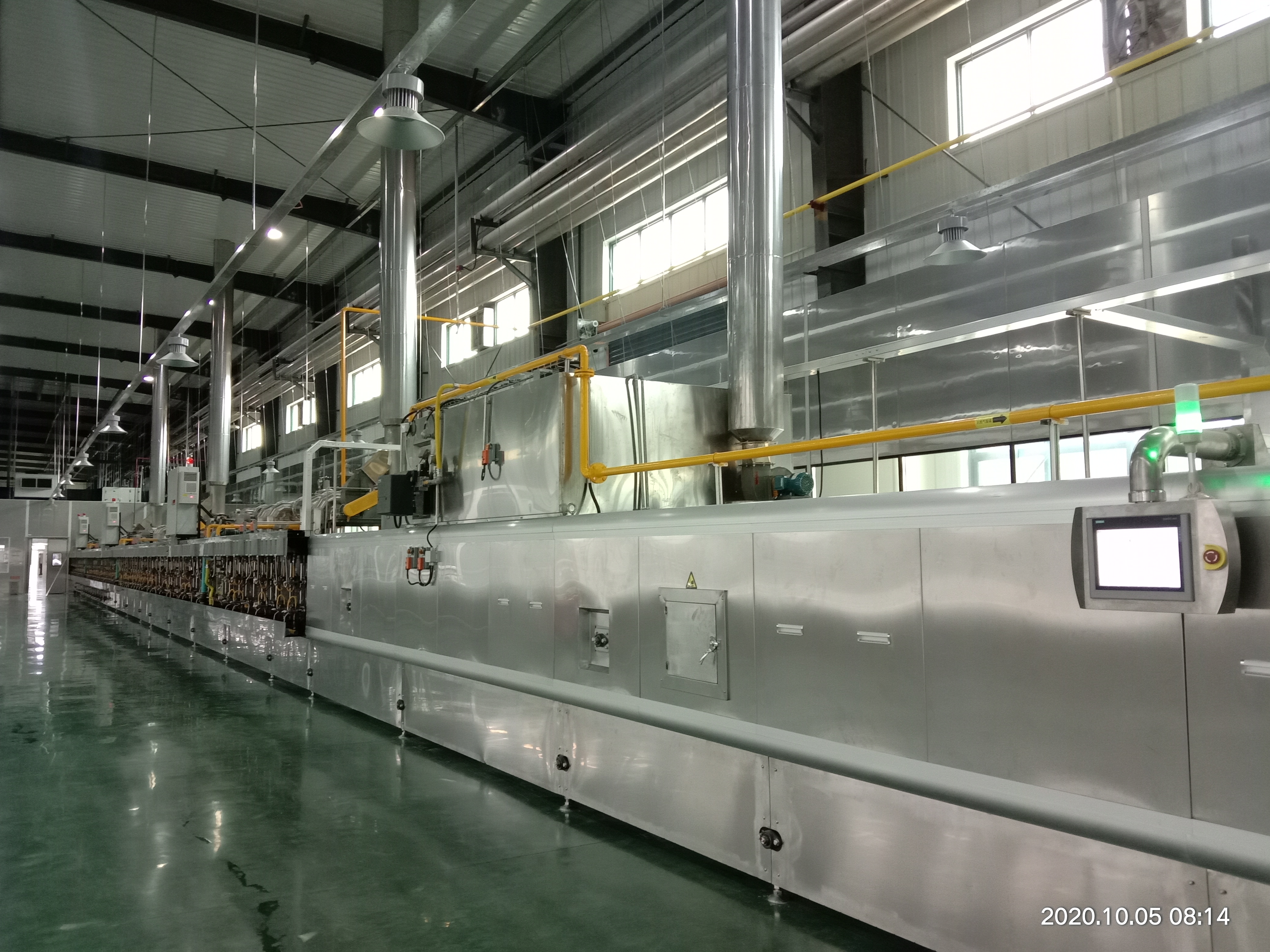 Hybrid Oven
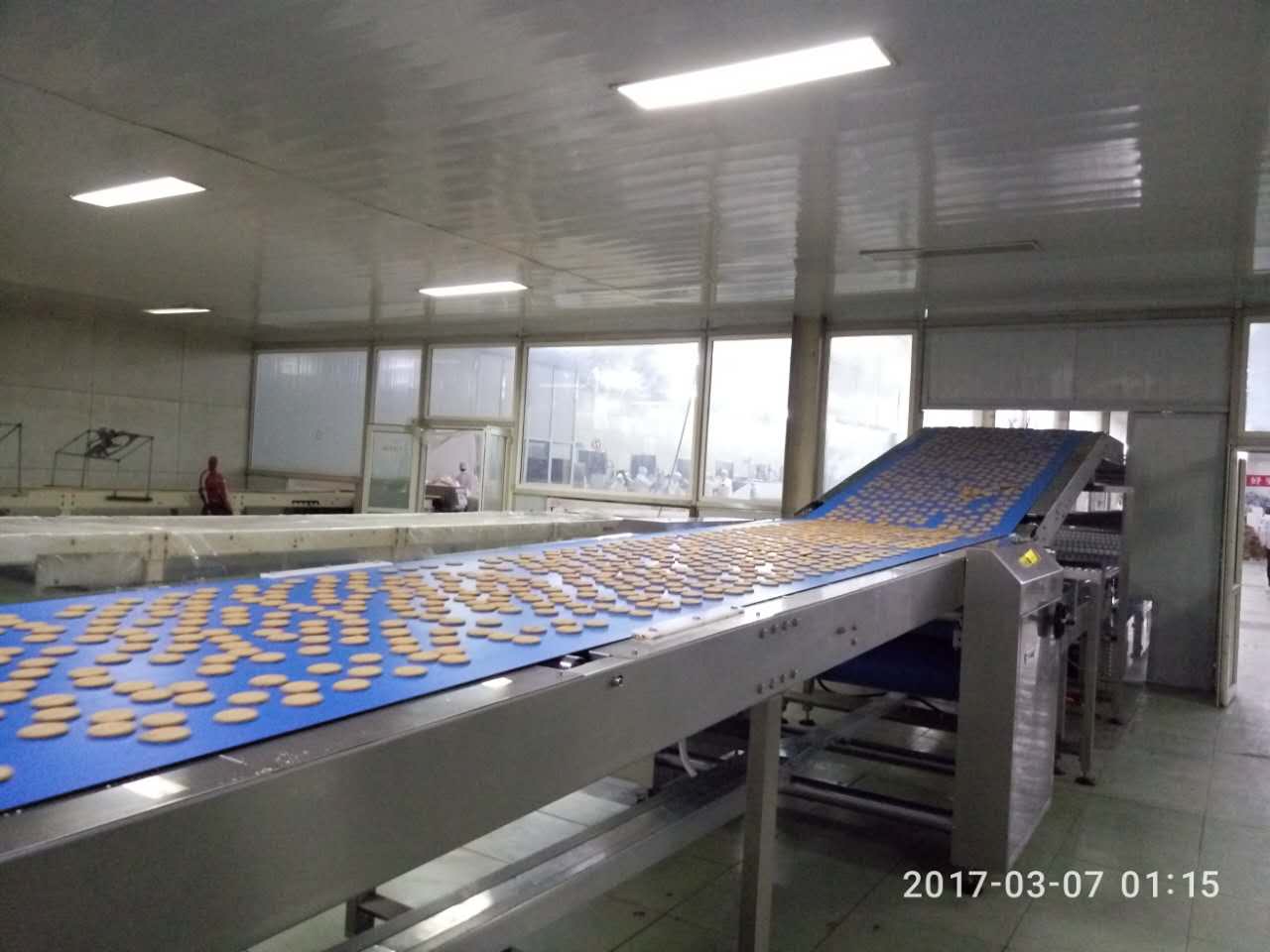 Biscuit Cooling section
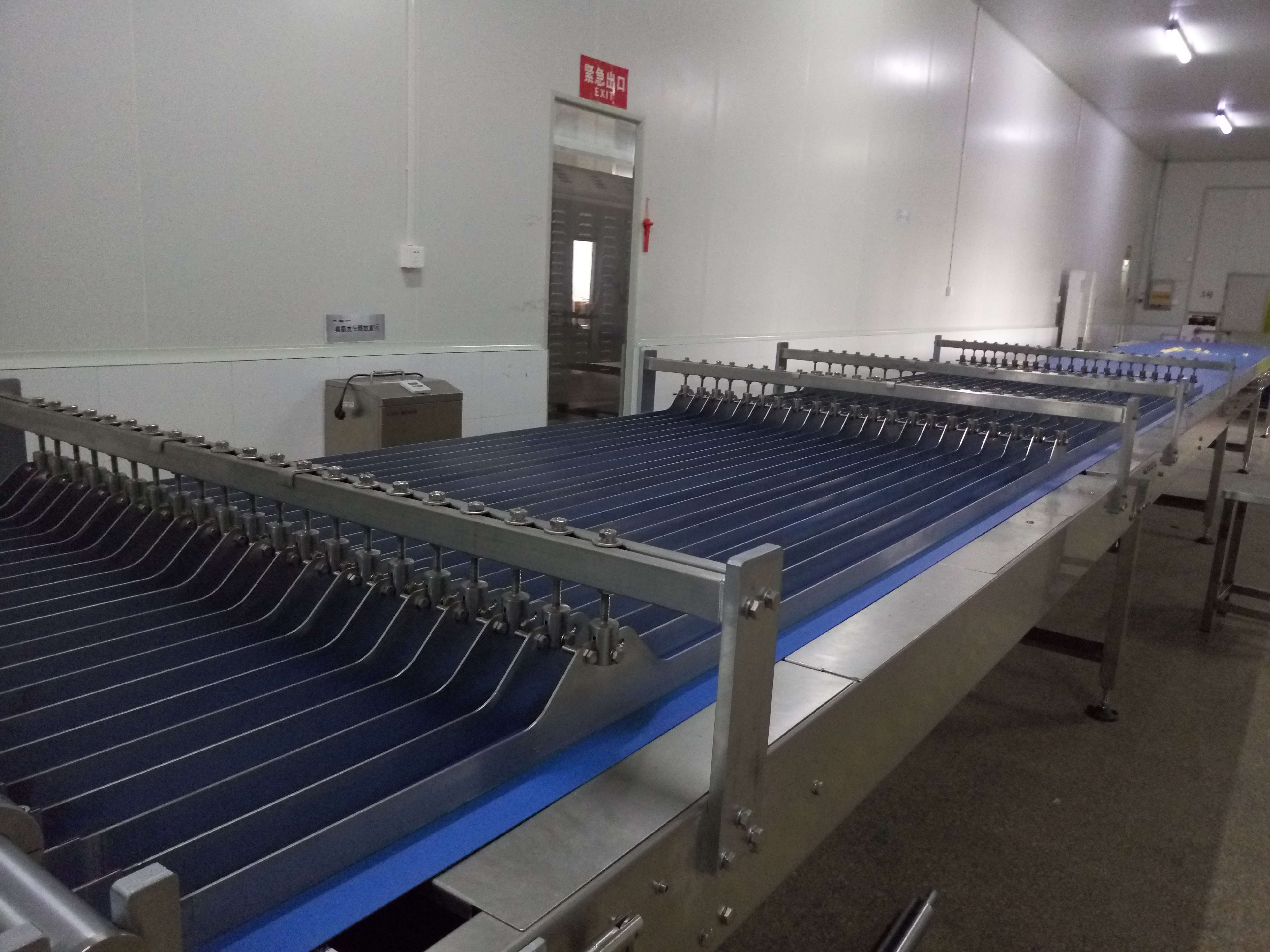 Biscuit Sorting section